
- Leave a review
- Bookmark
- Share
- Report
- prev
- next
Description
As December 2 approaches, we gear up to celebrate UAE National Day—a momentous occasion that invites us to reflect on the historic journey that shaped the nation. This year, let’s pay tribute to the visionary leaders who laid the foundation of the United Arab Emirates and commemorate their extraordinary achievement. Join us as we delve into the significance of this landmark date and honor the legacy that continues to inspire.
History
The United Arab Emirates (UAE) wasn’t always the influential and thriving nation it is today. In its early history, the region was fragmented into rival tribal factions, each controlling different territories. In 1820, Britain intervened, offering protection to these tribes in exchange for partial control of their affairs. With peace as their priority, the tribes agreed, granting Britain the role of mediator in their disputes. However, by 1968, Britain, facing economic challenges, chose to withdraw its presence from the region.
Following Britain’s departure, the leaders of six emirates — Abu Dhabi, Dubai, Ajman, Al Ain, Sharjah, and Umm al-Quwain — recognized an opportunity for unity. On December 2, 1971, they formally declared independence from British rule, establishing the United Arab Emirates as a sovereign nation. Shortly after, Ras Al Khaimah joined the union, completing the formation of the seven-emirate federation. Remarkably, this monumental transition was achieved peacefully, without conflict.
The newly unified nation celebrated its formation by raising the UAE’s national flag for the first time and appointing Sheikh Zayed bin Sultan Al Nahyan as its inaugural president. Sheikh Zayed, the ruler of Abu Dhabi and the wealthiest among the emirates, played a pivotal role in steering the young nation toward stability and prosperity.
Today, the UAE stands as a symbol of progress and unity, boasting a robust economy, vast oil reserves, a booming tourism sector, and architectural marvels like some of the tallest skyscrapers in the world. For Emiratis, the nation’s success is a testament to the power of collaboration and the decision to unite in 1971, marking the beginning of their remarkable journey.
How To Celebrate
1. Attend National Day Events
- Parades and Fireworks: Enjoy vibrant parades featuring traditional Emirati dances, music, and performances. Don’t miss the spectacular fireworks displays lighting up the skies in major cities like Dubai and Abu Dhabi.
- Cultural Festivals: Visit cultural events showcasing Emirati heritage, including traditional crafts, camel racing, and culinary experiences.
2. Decorate Your Space
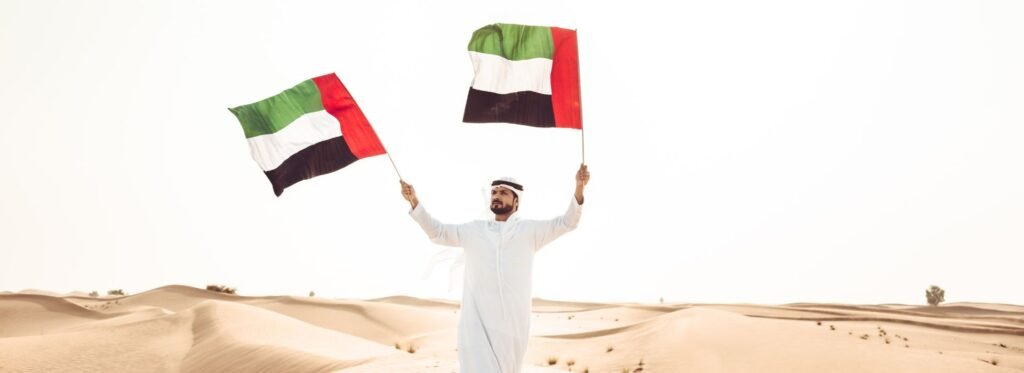
- Adorn your home, office, or car with the UAE flag, lights, and themed decorations. Many people dress in the flag's colors—red, green, white, and black—to express their patriotism.
3. Explore Emirati Culture
- Visit heritage villages or museums to learn about the UAE’s rich history. Places like Al Ain Oasis and Qasr Al Hosn offer a glimpse into the country’s roots.
- Try traditional Emirati cuisine, such as majboos, luqaimat, or karak chai, to savor local flavors.
4. Watch the Airshow
- Enjoy awe-inspiring aerobatic displays by the UAE Air Force. These thrilling airshows are a highlight of the celebrations and are held in major cities.
5. Enjoy Staycations and Discounts
- Many hotels, malls, and restaurants offer special discounts, packages, and promotions during National Day. Take advantage of these deals to plan a fun outing or a relaxing staycation.
6. Host or Join a Gathering
- Organize a National Day party with friends and family. Include activities like flag-making for kids, a trivia quiz about UAE history, and traditional Emirati music to set the mood.
7. Reflect and Give Back
- Take a moment to honor the leaders who shaped the nation and the unity that brought it to life. Participate in charitable activities or community service to embody the values of togetherness and generosity.
Amazing Facts
- A Nation of Seven Emirates: The UAE consists of seven emirates, with Abu Dhabi as the capital and Dubai as the most famous internationally.
- World’s Tallest Building: The Burj Khalifa in Dubai stands at 828 meters, making it the tallest building in the world.
- A Desert Oasis: Despite its desert landscape, the UAE boasts lush green parks, luxurious resorts, and impressive man-made islands like Palm Jumeirah.
- A Hub for Innovation: The UAE is known for its futuristic architecture, groundbreaking technology, and ambitious projects like Mars missions.
- Rich Cultural Heritage: The UAE is home to ancient traditions, including falconry, camel racing, and the vibrant art of Arabic calligraphy.
- World’s Largest Indoor Ski Resort: Ski Dubai, located inside the Mall of the Emirates, offers snowboarding and skiing in the middle of the desert!


Add a review